

Introduction: What Is the Science of Macroeconomics?
Macroeconomics is the study of the economy as a whole. Instead of focusing on one person, one company, or one market, macroeconomics looks at broad economic questions: Why do some countries grow faster than others? Why do prices rise? Why does unemployment increase during recessions? How can government policy influence economic performance?
The science of macroeconomics helps explain major economic events that affect everyday life. When people discuss inflation, interest rates, economic growth, unemployment, recessions, or government spending, they are discussing macroeconomic topics.
Macroeconomics is especially important because it connects individual decisions, business activity, government policy, and national economic outcomes. It helps us understand why economies expand, slow down, recover, or experience instability.
What Do Macroeconomists Study?
Macroeconomists study large economic patterns and try to explain how economies behave over time. Their work helps governments, businesses, investors, and individuals make better decisions.
Economic Growth
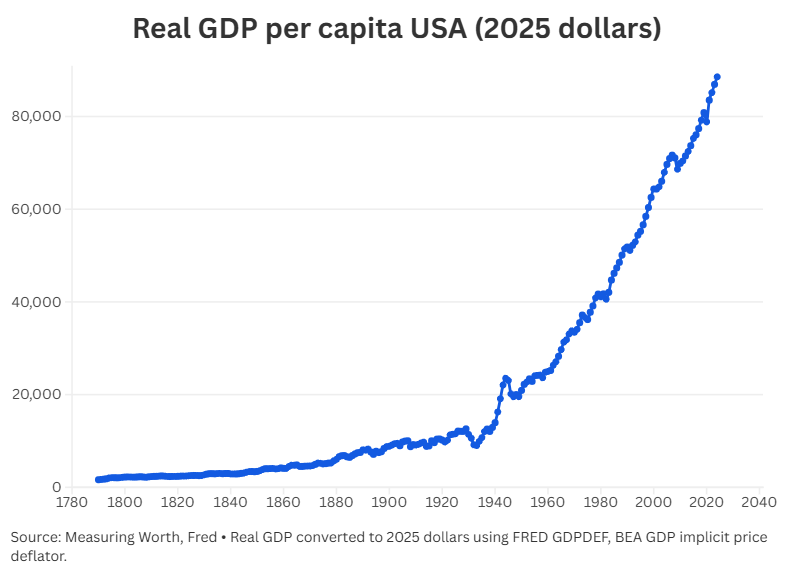
Economic growth refers to an increase in the production of goods and services over time. A growing economy usually means higher income, more job opportunities, better technology, and improved living standards.
Macroeconomists ask why some countries experience strong growth while others remain poor or stagnant. They study factors such as capital investment, education, technology, productivity, institutions, and labor force growth.
Inflation
Inflation occurs when the general level of prices rises over time. When inflation is high, money loses purchasing power because the same amount of money buys fewer goods and services.
Macroeconomists study inflation to understand why prices rise, how inflation affects households and businesses, and what central banks can do to control it.
Unemployment
Unemployment measures the percentage of people in the labor force who are actively looking for work but cannot find a job.
High unemployment can reduce income, lower consumer spending, and create financial stress for families. Macroeconomists study unemployment to understand why job markets weaken and what policies may help create more stable employment.
Recessions and Depressions
A recession is a period of declining economic activity. During a recession, businesses may reduce production, consumers may spend less, unemployment may rise, and income may fall.
A depression is a more severe and longer-lasting economic decline. Macroeconomists study these events to understand their causes and to develop policies that may reduce their frequency or severity.
The Three Key Measures of the Economy
To evaluate how an economy is performing, economists often focus on three major indicators: real GDP, inflation, and unemployment.
Real GDP
Real GDP, or real gross domestic product, measures the total value of goods and services produced in an economy, adjusted for changes in prices.
Real GDP is important because it shows whether an economy is producing more or less over time. When real GDP rises, the economy is usually growing. When real GDP falls, the economy may be entering a recession.
Inflation Rate
The inflation rate measures how quickly prices are rising. Moderate inflation is common in many economies, but high inflation can create uncertainty and reduce purchasing power.
When inflation is too high, central banks may raise interest rates to slow spending and reduce pressure on prices.
Unemployment Rate
The unemployment rate shows how many people are looking for work but cannot find a job. It is one of the most important indicators of economic health because employment affects income, consumer spending, and social stability.
Why Macroeconomics Matters in Real Life
Macroeconomics is not only a subject for economists. It affects daily life in many ways.
When inflation rises, groceries, rent, gas, and other expenses become more expensive. When unemployment increases, people worry more about job security. When GDP grows, businesses often expand and hire more workers.
Business Decisions
Companies use macroeconomic information to decide whether to hire workers, open new locations, increase production, or invest in new technology.
For example, if a business expects strong economic growth, it may expand operations. If it expects a recession, it may reduce costs and delay investment.
Government Policy
Governments use macroeconomic data to decide how much to tax, spend, borrow, or invest in public programs.
Macroeconomic policy can influence employment, inflation, public debt, infrastructure, education, healthcare, and economic growth.
Personal Finance
Individuals can use macroeconomic knowledge to understand interest rates, job markets, inflation, housing prices, and investment risks.
For example, when interest rates rise, borrowing money becomes more expensive. This can affect credit cards, car loans, mortgages, and business financing.
How Economists Think
Economists try to study the economy scientifically. They collect data, observe patterns, create theories, and test ideas.
However, economics is different from natural sciences because economists cannot easily run controlled experiments on entire countries. Instead, they often use historical evidence, mathematical models, statistical analysis, and comparisons between countries or time periods.
Economists must also work with uncertainty. The economy is influenced by millions of decisions made by consumers, businesses, banks, governments, and global institutions.
Economic Models Explained
An economic model is a simplified version of reality. Economists use models to understand complicated relationships in the economy.
A model does not include every detail. Instead, it focuses on the most important variables. This makes it easier to analyze cause and effect.
Why Economists Use Models
Economists use models because the real economy is complex. Millions of consumers, workers, firms, investors, and governments make decisions every day.
Models help economists simplify this complexity and answer questions such as:
How do prices change?
Why does demand increase or decrease?
What happens when production costs rise?
How do policies affect employment and inflation?
Why do economies grow over time?
Why do recessions happen?
Exogenous and Endogenous Variables
Economic models usually include two types of variables: exogenous variables and endogenous variables.
Exogenous Variables
Exogenous variables are factors that come from outside the model. The model takes them as given.
For example, in a simple model of the pizza market, the price of ingredients may be an exogenous variable. The model does not explain why ingredient prices change, but it studies how those prices affect the pizza market.
Endogenous Variables
Endogenous variables are explained inside the model. They are the results the model is trying to understand.
In the pizza market example, the price of pizza and the quantity of pizza sold could be endogenous variables because the model tries to explain how they are determined.
Supply and Demand as a Foundation of Economic Thinking
Supply and demand is one of the most important models in economics. It explains how prices and quantities are determined in a market.
Demand
Demand shows how much consumers are willing to buy at different prices. Usually, when the price of a product rises, consumers buy less. When the price falls, consumers buy more.
Supply
Supply shows how much producers are willing to sell at different prices. Usually, when the price rises, producers want to sell more because selling becomes more profitable.
Market Equilibrium
Market equilibrium happens when the quantity supplied equals the quantity demanded. At this point, the market has an equilibrium price and an equilibrium quantity.
How Changes in Demand and Supply Affect the Economy
Economic models help explain what happens when conditions change.
When Demand Increases
If consumer demand increases, the demand curve shifts to the right. This usually raises both the equilibrium price and the equilibrium quantity.
For example, if more people want pizza, pizza restaurants may sell more pizzas and charge higher prices.
When Supply Decreases
If production costs increase, supply may decrease. The supply curve shifts to the left, leading to a higher price and a lower quantity.
For example, if cheese, flour, or tomato prices rise, pizza becomes more expensive to produce. As a result, restaurants may produce less pizza and charge higher prices.
Flexible Prices and Sticky Prices in Macroeconomics
One important question in macroeconomic models is whether prices are flexible or sticky.
What Are Flexible Prices?
Flexible prices adjust quickly when supply or demand changes. In a flexible-price model, markets move toward equilibrium relatively fast.
This type of model is often useful for studying long-run economic issues, such as economic growth over many years or decades.
What Are Sticky Prices?
Sticky prices are prices that do not adjust immediately. In the real world, some prices and wages change slowly.
For example, companies may not change menu prices, salaries, rent contracts, or service prices every day. Some prices may stay fixed for months or even years.
Why Sticky Prices Matter
Sticky prices are important because they help explain short-run economic fluctuations. If prices and wages do not adjust quickly, changes in demand can affect production and employment.
For example, if consumer spending falls but prices do not immediately decline, businesses may reduce output and lay off workers. This can contribute to a recession.
Long Run vs. Short Run
In macroeconomics, the difference between flexible and sticky prices helps economists separate long-run analysis from short-run analysis.
In the long run, prices are more likely to adjust.
In the short run, some prices and wages may remain fixed.
This is why economists often use different models for different time periods.
Microeconomics and Macroeconomics: How Are They Related?
Microeconomics and macroeconomics are closely connected.
What Is Microeconomics?
Microeconomics studies how households and firms make decisions. It focuses on individual markets, consumer behavior, production decisions, prices, and profits.
For example, microeconomics may study how a family decides what to buy or how a company decides how much to produce.
What Is Macroeconomics?
Macroeconomics studies the economy as a whole. It focuses on total output, inflation, unemployment, economic growth, interest rates, and national income.
Why Macroeconomics Needs Microeconomic Foundations
Macroeconomic outcomes come from many individual decisions. Total consumer spending comes from millions of household choices. Total investment comes from many business decisions. Total employment depends on decisions made by workers and firms.
Because of this, macroeconomic models often depend on microeconomic foundations. Even when macroeconomic models do not explain every individual decision in detail, they are still connected to the behavior of households and businesses.
Classical Theory and Long-Run Macroeconomics
Classical theory is an important part of macroeconomics. It usually assumes that prices are flexible and that markets tend to clear over time.
Why Classical Theory Matters
Classical theory is useful for studying long-run economic performance. It helps explain how output, saving, investment, capital, labor, and technology influence the economy over long periods.
Long-Run Economic Questions
Classical macroeconomic models often focus on questions such as:
Why do some countries become rich?
What determines national income?
How does saving affect investment?
How does capital accumulation affect growth?
How does technology improve productivity?
These questions are important because long-run growth has a major effect on living standards.
Growth Theory: The Economy in the Very Long Run
Growth theory studies how economies develop over many years or decades. It focuses on the sources of rising income and productivity.
Main Drivers of Economic Growth
Economic growth is often connected to:
Capital accumulation
Population and labor force growth
Education and human capital
Technological progress
Innovation
Productivity
Strong institutions
Growth theory helps explain why some economies experience rapid development while others struggle to improve living standards.
Business Cycle Theory: The Economy in the Short Run
Business cycle theory studies short-run fluctuations in the economy. These fluctuations include expansions, recessions, booms, and slowdowns.
What Is the Business Cycle?
The business cycle refers to the movement of the economy through periods of growth and contraction.
During an expansion, GDP rises, businesses grow, and unemployment often falls.
During a recession, GDP falls or grows slowly, businesses reduce activity, and unemployment often rises.
Why Business Cycles Matter
Business cycles matter because they affect jobs, income, investment, government budgets, and financial markets.
Macroeconomists study business cycles to understand why economies fluctuate and how policy can reduce economic instability.
Macroeconomic Policy Debates
Macroeconomic policy debates focus on what role the government and central bank should play in managing the economy.
Fiscal Policy
Fiscal policy involves government spending and taxation.
When the economy is weak, the government may increase spending or reduce taxes to stimulate demand. When inflation is high or debt is rising, the government may reduce spending or increase taxes.
Monetary Policy
Monetary policy is controlled by the central bank. It involves interest rates, money supply, and financial conditions.
When inflation is high, central banks may raise interest rates. When the economy is weak, they may lower interest rates to encourage borrowing and spending.
The Big Policy Question
A major debate in macroeconomics is how active policymakers should be.
Some economists believe government policy can help stabilize the economy. Others worry that policy interventions may create unintended consequences, such as inflation, debt, or market distortions.
The Limits of Economic Models
Economic models are useful, but they are not perfect. They simplify reality, so they may leave out details that matter in certain situations.
For example, a basic supply and demand model may assume that all sellers charge the same price. In reality, different businesses may charge different prices based on location, brand, quality, or customer experience.
The value of a model depends on the question being asked. A simple model can be useful for understanding basic relationships, while a more complex model may be needed for detailed policy analysis.
Why Economists Use Different Models
No single model can answer every economic question. Macroeconomists use different models depending on the topic, time period, and assumptions.
A long-run model may be useful for studying growth.
A short-run model may be better for studying recessions.
A flexible-price model may explain long-term equilibrium.
A sticky-price model may explain short-term unemployment and business cycles.
This is why macroeconomics uses a variety of models rather than one universal theory.
Why Macroeconomics Is Important for Students and Professionals
Understanding macroeconomics can help students, professionals, and entrepreneurs make smarter decisions.
For Finance Students
Macroeconomics helps explain interest rates, inflation, market cycles, currency movements, and investment risk.
For Business Students
Macroeconomics helps explain consumer demand, production costs, labor markets, and strategic planning.
For Workers
Macroeconomics helps workers understand job market conditions, wages, recessions, and career opportunities.
For Voters
Macroeconomics helps citizens understand government decisions about taxes, spending, inflation, unemployment, and economic growth.
For Entrepreneurs
Entrepreneurs can use macroeconomic knowledge to decide when to expand, how to price products, how to prepare for recessions, and how to respond to changing consumer demand.
Key Concepts in the Science of Macroeconomics
Macroeconomics
The study of the economy as a whole, including growth, inflation, unemployment, and national income.
Real GDP
The total value of goods and services produced in an economy, adjusted for price changes.
Inflation
An increase in the general level of prices over time.
Deflation
A decrease in the general level of prices over time.
Unemployment
A situation in which people who want jobs and are actively looking for work cannot find employment.
Recession
A period of declining economic activity.
Depression
A severe and prolonged economic downturn.
Economic Model
A simplified theory used to explain economic relationships.
Endogenous Variable
A variable explained inside a model.
Exogenous Variable
A variable taken as given from outside a model.
Market Clearing
A situation where supply equals demand.
Flexible Prices
Prices that adjust quickly to changes in supply and demand.
Sticky Prices
Prices that adjust slowly over time.
Microeconomics
The study of households, firms, individual markets, prices, and decision-making.
FAQ: The Science of Macroeconomics
What is macroeconomics in simple terms?
Macroeconomics is the study of the whole economy. It looks at topics such as GDP, inflation, unemployment, economic growth, recessions, and government policy.
Why is GDP important?
GDP is important because it measures how much an economy produces. It helps economists understand whether the economy is growing or shrinking.
Why does inflation matter?
Inflation matters because it affects purchasing power. When prices rise quickly, people need more money to buy the same goods and services.
Why do economists build models?
Economists build models to simplify reality and understand relationships between economic variables. Models help explain how changes in one part of the economy affect another part.
What is the difference between microeconomics and macroeconomics?
Microeconomics studies individual households, firms, and markets. Macroeconomics studies the economy as a whole, including national income, inflation, unemployment, and growth.
What is the difference between flexible prices and sticky prices?
Flexible prices adjust quickly when economic conditions change. Sticky prices adjust slowly, which can help explain short-run economic problems such as unemployment and recessions.
Conclusion: Macroeconomics Helps Us Understand the Bigger Picture
The science of macroeconomics helps explain how the economy works as a whole. By studying GDP, inflation, unemployment, economic growth, business cycles, and economic models, we can better understand the forces that shape everyday life.
Macroeconomics does not predict the future perfectly, but it gives us powerful tools to analyze economic problems and make better decisions. It helps governments design policy, businesses plan for the future, investors understand risk, and individuals understand the economic forces that affect their jobs, income, and purchasing power.
In the end, macroeconomics is valuable because it connects individual choices with national outcomes. It shows how millions of decisions made by households, firms, and governments combine to shape the direction of the entire economy.